
Weather Instruments
Weather Instruments
Is the air warmer than yesterday? How much rain fell overnight? A weather scientist, or meteorologist, needs more than a guess. Different instruments measure different parts of the weather. A useful record includes the measurement, its unit, the place, and the time.
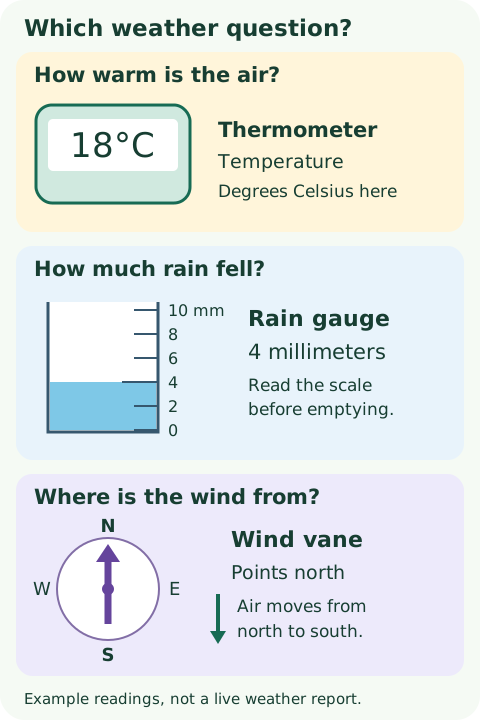
Example readings, not a live weather report. Each tool answers a different question.
Warm Air, Cool Air
A thermometer measures temperature, often in degrees Celsius or degrees Fahrenheit. Some thermometers have liquid that rises in a narrow tube as it warms. Others use an electronic sensor and a number display. Both can measure temperature; the liquid is not what makes a tool a thermometer.
An outdoor air thermometer needs a suitable sheltered position. Direct sunlight can heat the instrument itself, so that reading may not represent the surrounding air temperature.
Catch and Measure Rain
A rain gauge measures rainfall over a period of time. In a simple collecting gauge, read the water level against its rainfall scale and record the amount before emptying it. The scale may use millimeters or inches. Follow the gauge's instructions: a funnel can collect rain over a wider area than the measuring tube, so its scale accounts for that difference.
If a properly working gauge records 4 millimeters between two observation times, that is the rainfall collected during that interval. It is not the depth of every puddle nearby. Keep the instrument in the same suitable place and record the interval when comparing days.
How Fast? From Where?
An anemometer measures wind speed. A cup anemometer has cups that turn in the wind; other designs use different sensors. A wind vane shows wind direction. Weather wind directions tell where the wind comes from: a north wind blows from the north toward the south.
Speed and direction answer different questions. A vane pointing north does not tell you whether the wind is gentle or strong.
More Clues About the Air
A barometer measures air pressure. Changes in pressure help meteorologists understand changing weather, but one reading cannot promise rain or sunshine. A hygrometer measures humidity, which concerns water vapor in the air. The relative humidity shown by many instruments is a percentage; it is not a measurement of rain that has fallen.
Forecasters combine observations from many places with other information. Radar can help locate precipitation and signs of storm rotation. It has limits: distant radar beams sample higher parts of a storm and can miss features near the ground. One tool cannot answer every weather question.
Be a Weather Recorder
With a grown-up, choose one suitable instrument and read it from a safe place in calm weather. Record the tool, number, unit, place and time. Repeat later using the same method. What changed? What can your instrument tell you—and what would need a different tool?

You finished the article! Great job!