
Wikimedia Commons
The Periodic Table
The Periodic Table
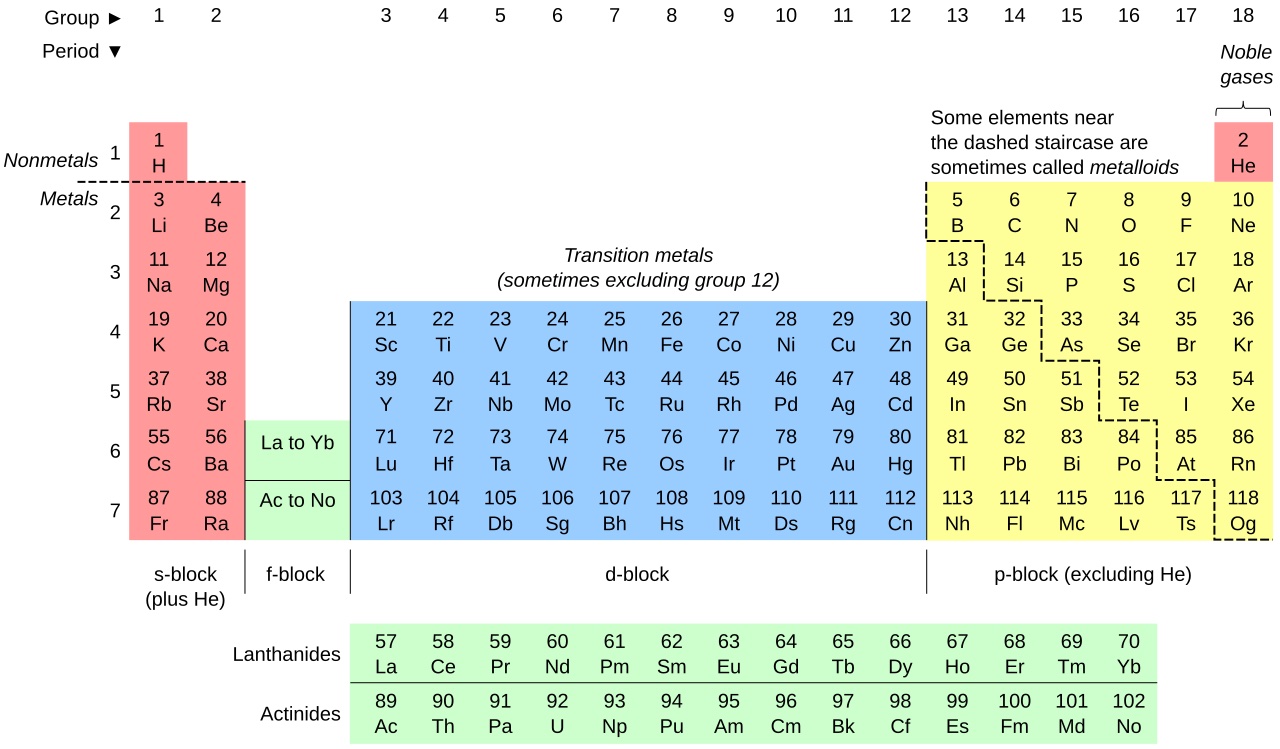
The periodic table is a big chart used by scientists. It lists all the elements that make up everything around us. Each element has its own box with a letter symbol and a number. The elements are sorted by how they act and what they are made of.
How It Is Arranged
The table has rows that go across and columns that go up and down. Rows are called periods, and columns are called groups. Elements in the same group often act alike. For example, the elements in one column are all soft metals that react with water.
Who Made It
A Russian scientist named Dmitri Mendeleev made the first good periodic table in 1869. He left empty spaces for elements that had not been found yet. Later, scientists found those missing elements just like he said. Today, the table has 118 elements.
More to Know
Mendeleev left gaps for elements he predicted; gallium (1875), scandium (1879), and germanium (1886) matched his predictions. In 1913 Moseley showed elements are ordered by atomic number. About 90 elements occur naturally, and 118 are known. A compound has atoms bonded in fixed amounts, while a mixture can be separated physically. Marie Curie discovered polonium and radium in 1898 and won Nobel Prizes in 1903 and 1911, and radiation can harm the body.
Fun Facts
- Hydrogen is the very first element on the table.
- Some elements, like gold and silver, have been known for thousands of years.
- The newest elements were made by scientists in labs.
Did You Know?
Every atom in your body is made of elements from the periodic table. You are made of stardust!

You finished the article! Great job!