
Wikimedia Commons
Fossils
Fossils
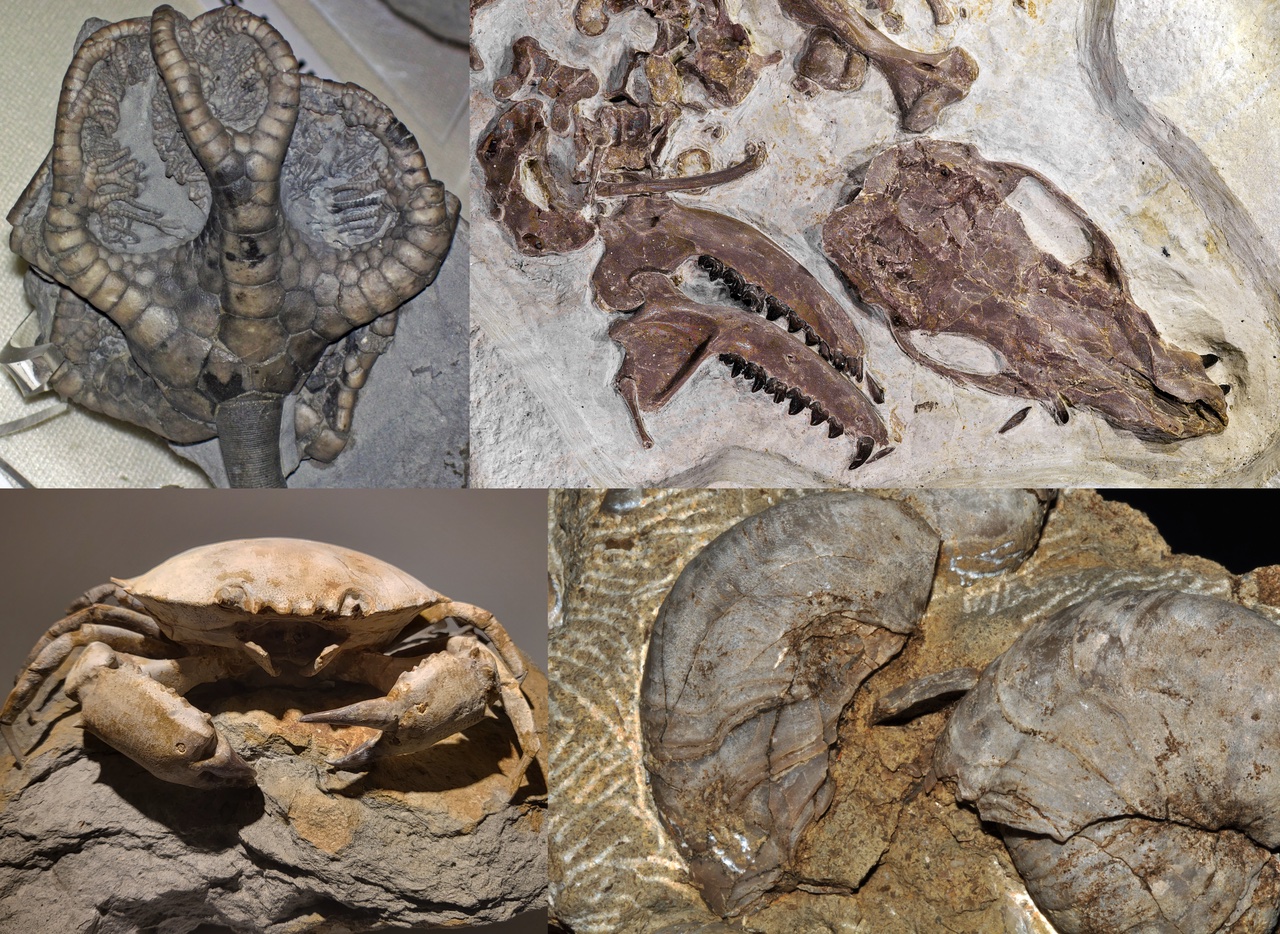
A fossil is a preserved remain or trace of past life. A shell, a leaf impression and an animal’s track can all provide evidence. Many fossils occur in sedimentary rock, but some remains are preserved in materials such as amber, which formed from tree resin.
Bodies and Traces
Body fossils preserve evidence of an organism’s body, such as a bone, tooth or leaf. Trace fossils record its activity, such as a footprint or burrow. A footprint can tell us that an animal moved across a surface even if none of its bones remain there.
An Unusual Journey
Most dead organisms decay or are eaten. Burial can protect remains, and hard parts are more likely to survive than soft parts. Different processes may preserve fossils. Minerals can fill spaces or replace material; an impression can also remain after the original material is gone. Fossils do not all form in exactly the same way.
Reading the Evidence
Paleontologists study fossils and their surroundings. Shapes, trackways and the rocks around them provide clues about past life and environments. A fossil rarely tells a complete life story by itself. Scientists compare evidence and distinguish observations from explanations.
Look Again
A leaf impression records part of a plant’s body. A footprint records an action. Both are fossils, but they answer different questions.

You finished the article! Great job!