
Wikimedia Commons
Mangroves
Mangroves
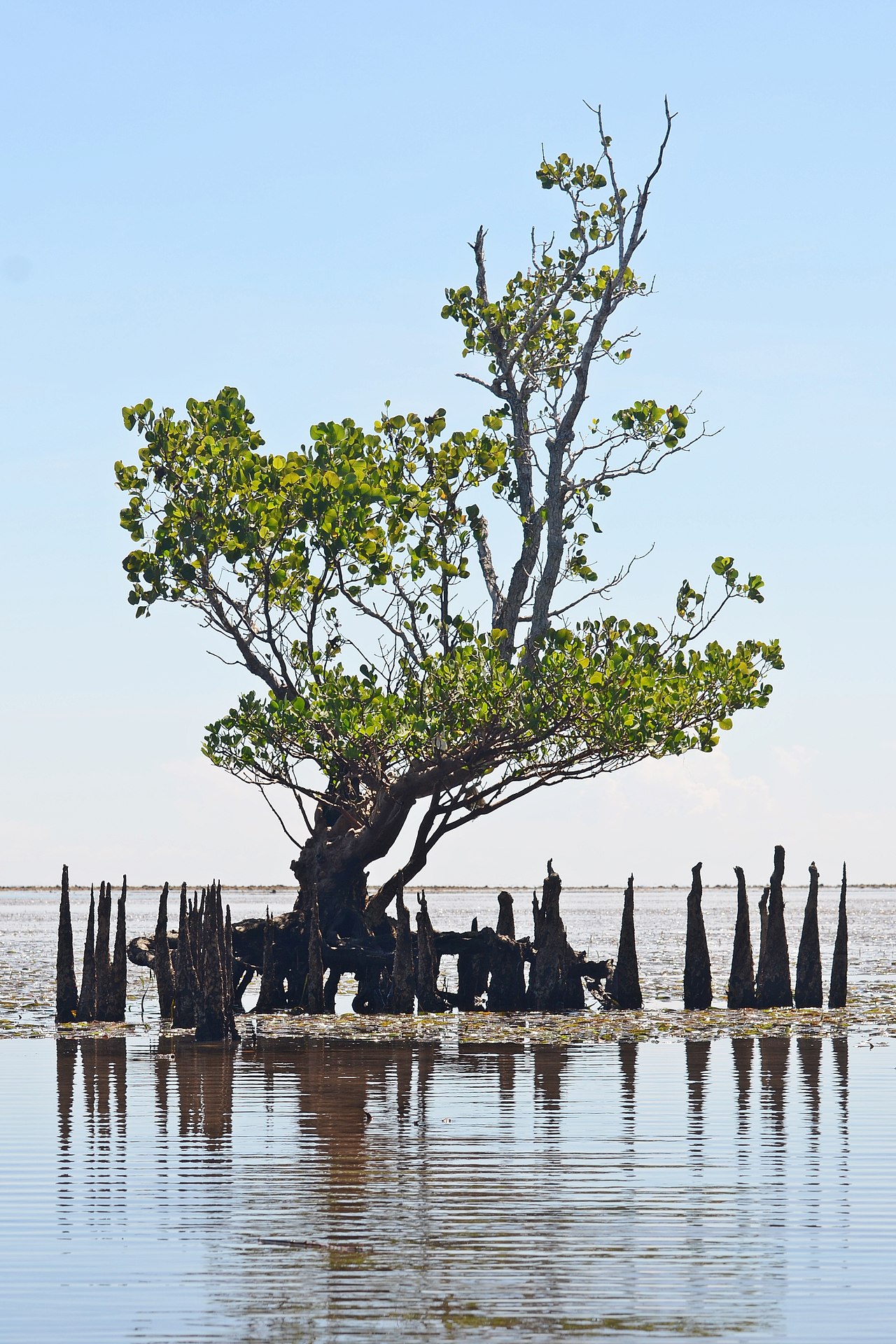
Mangroves are trees and shrubs that grow along many tropical and subtropical coasts. They can tolerate salty conditions and the changing water levels of tides. Different species have different roots and ways of dealing with salt.
Living with Salt and Mud
Some mangroves keep much of the salt out as their roots take in water. Others release salt through special glands in their leaves. They do not remove all the salt from the surrounding sea.
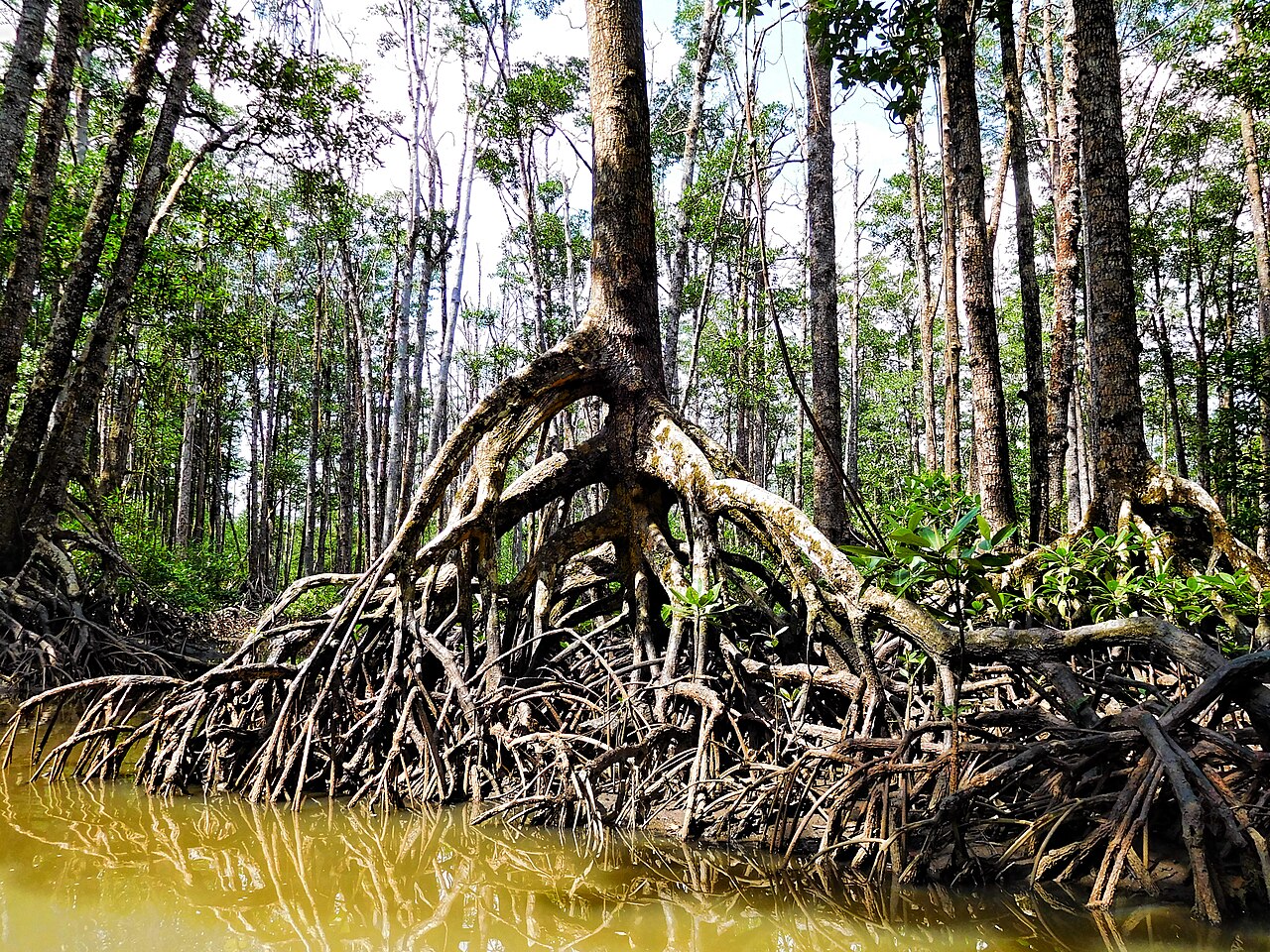
Waterlogged mud contains little oxygen. Roots that reach above the mud or water help some mangroves exchange gases with the air. Prop roots can also help support a tree.
A Busy Root Network
Mangrove roots slow water, allowing some sediment to settle. They help stabilize coastlines and reduce erosion. Fish and other animals find food and shelter among the roots. Hiding places can reduce danger from predators, but they do not make every animal safe.
Valuable, but Not Invincible
Mangrove forests can reduce some wave and storm effects. How much they help depends on the forest and the conditions; they do not stop every flood or storm. Their plants and soils also store carbon. Protecting healthy forests supports wildlife and coastal communities.

You finished the article! Great job!