Wikimedia Commons
The Industrial Revolution
The Industrial Revolution
Long ago, most people made things by hand. They grew food on farms and sewed clothes at home. Then, about 250 years ago, something big changed. People invented new machines that could do the work much faster. This time of change is called the Industrial Revolution. It began in Great Britain and then spread to other countries around the world. It changed the way people lived, worked, and traveled.
New Machines
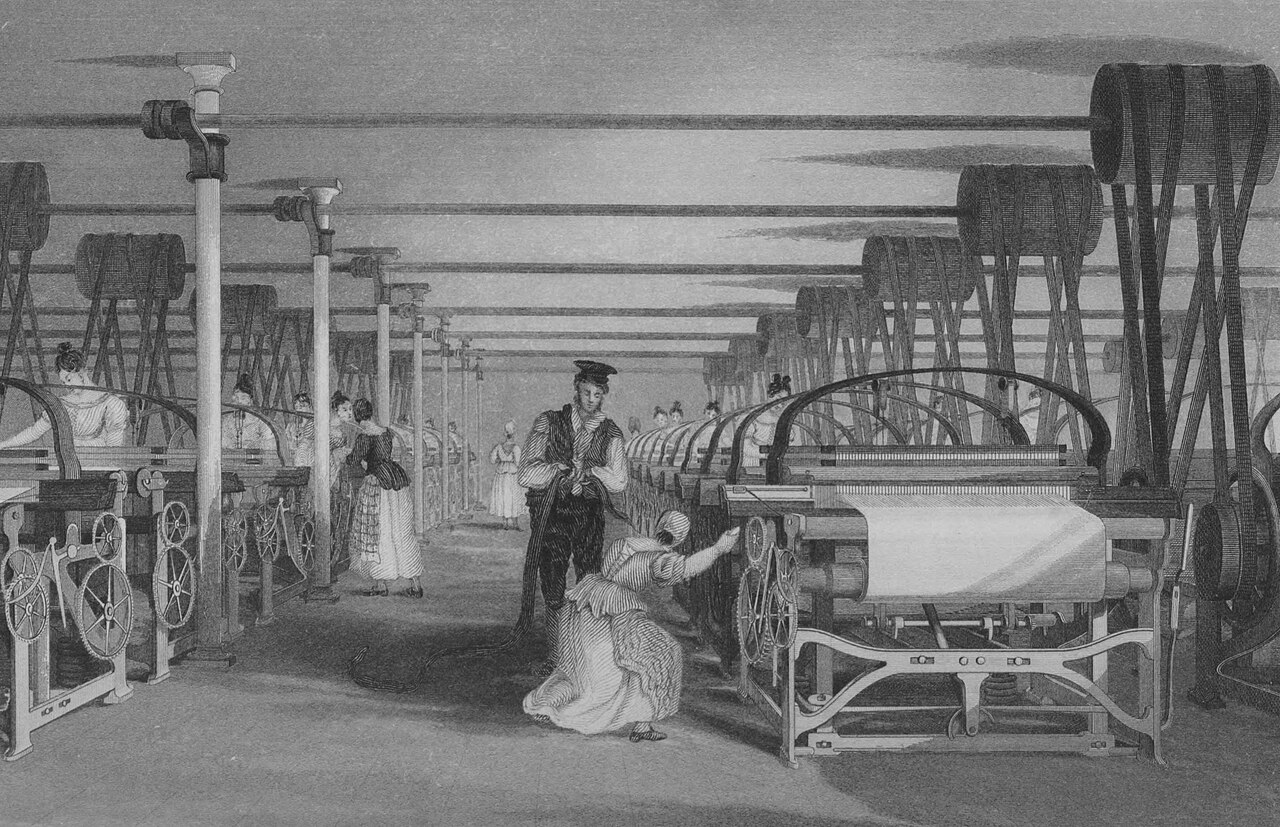
Before the Industrial Revolution, people used their hands and simple tools. Then clever inventors made new machines. One big invention was the steam engine. It used hot steam from boiling water to make wheels turn. Steam engines could power trains, boats, and factory machines. Other machines could spin thread and weave cloth very fast. These new tools helped people make more things in less time.
Life in Factories and Cities
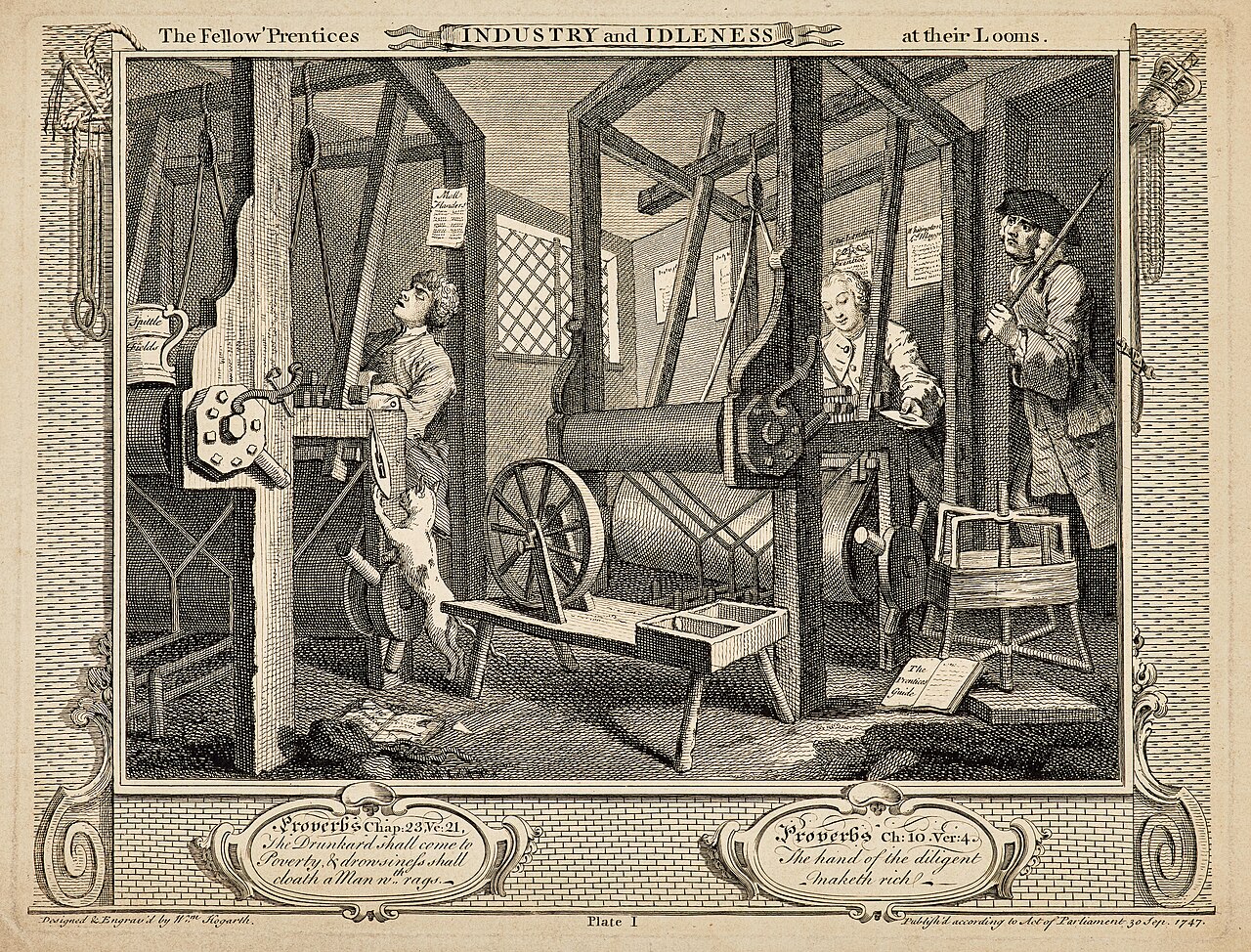
Many people left their farms and moved to cities to work in big factories. Factories were noisy and sometimes dangerous. Men, women, and even children worked long hours for little pay. Cities grew very fast as more workers arrived. New trains and steamships made it easy to send goods and people to faraway places. Life became very different from before, and the world started to look more like it does today.
More to Know
Before factories, families spun and wove at home. Hargreaves's spinning jenny (about 1764) and power looms moved cloth-making into factories, where bells and clocks set the pace of 12- to 14-hour days. The Stockton and Darlington railway opened in 1825, Morse sent the first long-distance telegraph message in 1844, and the Suez Canal opened in 1869. Smoke, crowded housing, and child labor were the costs. Britain's Factory Act of 1833 banned children under nine from textile mills.
Fun Facts
- A famous early steam locomotive called the Rocket could go about 30 miles per hour.
- Factories ran day and night, so cities were lit up with gas lamps on the streets.
- Kids as young as 5 years old sometimes worked in factories before laws were made to protect them.
Did You Know?
The Industrial Revolution started in Great Britain in the 1760s because it had lots of coal to burn, rivers for boats, and smart inventors with new ideas.

You finished the article! Great job!