Wikimedia Commons
Cells
Cells
Cells are the smallest parts of living things. You cannot see them without a microscope. Every part of your body is made of cells. Plants, animals, and many tiny germs, such as bacteria, are made of cells too.
Parts of a Cell
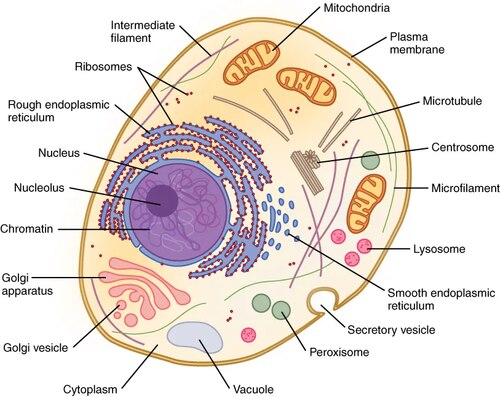
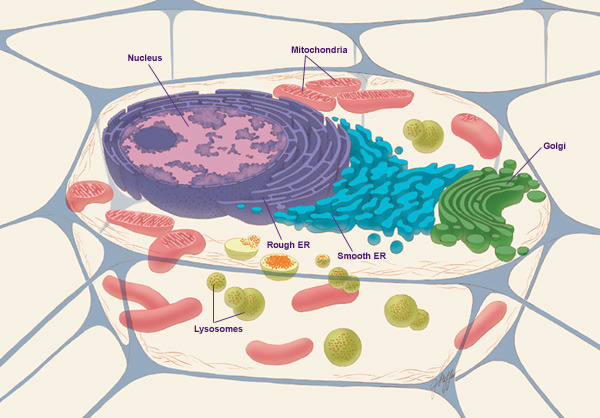
Cells are like tiny rooms with special parts inside. The nucleus is the brain of the cell and holds DNA. The outside is called the cell membrane and keeps the cell together. Inside are small parts that give the cell energy and make things it needs.
Types of Cells
Your body has many different kinds of cells. Skin cells protect you on the outside. Muscle cells help you move. Nerve cells send messages, and blood cells carry oxygen around your body.
More to Know
Cells of the same kind form tissues, such as muscle tissue. Different tissues join to make organs, like the heart, and several organs working together make a system, such as the circulatory system. The skeletal, muscular, digestive, respiratory, and nervous systems all cooperate to keep the body alive. Cells grow, divide, and replace themselves, as skin cells do, and red blood cells carry oxygen. Cells need food and oxygen to live.
Fun Facts
- Your body has about 37 trillion cells.
- The biggest cell you can see is a bird's egg yolk.
- Many of your cells are replaced over time, but some, like most brain nerve cells, last your whole life.
Did You Know?
In 1665 a scientist named Robert Hooke described cells for the first time. He was looking at a piece of cork through a microscope.

You finished the article! Great job!