
Wikimedia Commons
Pilgrimage
Pilgrimage
A pilgrimage is a journey to a place that has deep religious meaning. The traveler is called a pilgrim. People may travel alone, with family, or in a large group. Some cross a city, while others journey thousands of kilometres. Not every member of a religion goes on pilgrimage, but these journeys are important in many traditions.
Why People Go
Pilgrims may travel to pray, give thanks, remember an important person or event, or feel closer to their faith. The journey itself can matter as much as the destination. Walking a long distance, sharing simple meals, and helping other travelers can give pilgrims time to think.
Some pilgrimages follow set routes and rituals. Others are personal visits. Pilgrims might wear special clothing, sing, meditate, bathe in water considered sacred, or leave a small offering. What they do depends on their tradition and the place they visit.
Journeys in Different Traditions
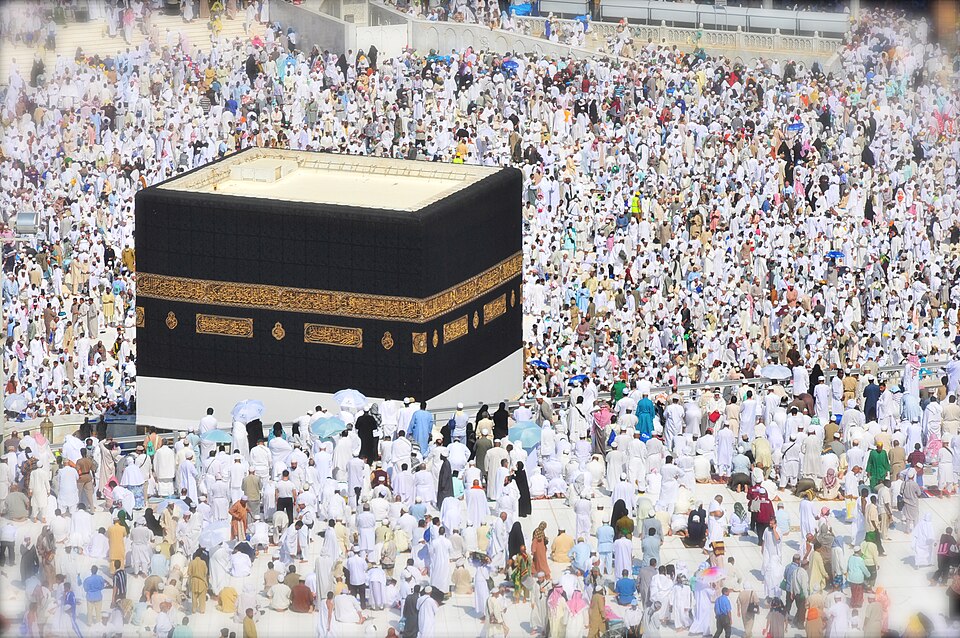
Muslims who are physically and financially able are expected to make the Hajj to Mecca once in their lives. Hindus visit many sacred places, including Varanasi and the River Ganges. Buddhists may visit places connected with the Buddha's life, such as Bodh Gaya in India.
Christians travel to places including Jerusalem, Rome, and Santiago de Compostela. Jewish visitors may pray in Jerusalem, a city sacred in Judaism. Sikhs may visit the Golden Temple in Amritsar. These are only a few examples; pilgrimage traditions exist around the world.
Traveling with Respect
Sacred sites are also living communities. Visitors should learn local rules about clothing, photography, food, and quiet spaces. A place may welcome tourists but reserve certain areas or ceremonies for worshippers. Respect means listening, asking permission, and never treating another person's sacred practice as a costume or game.
Did You Know?
Some pilgrimage routes are marked by symbols. On the Camino de Santiago in Europe, travelers often follow signs showing a scallop shell.

You finished the article! Great job!