
Wikimedia Commons
The Orchestra
The Orchestra
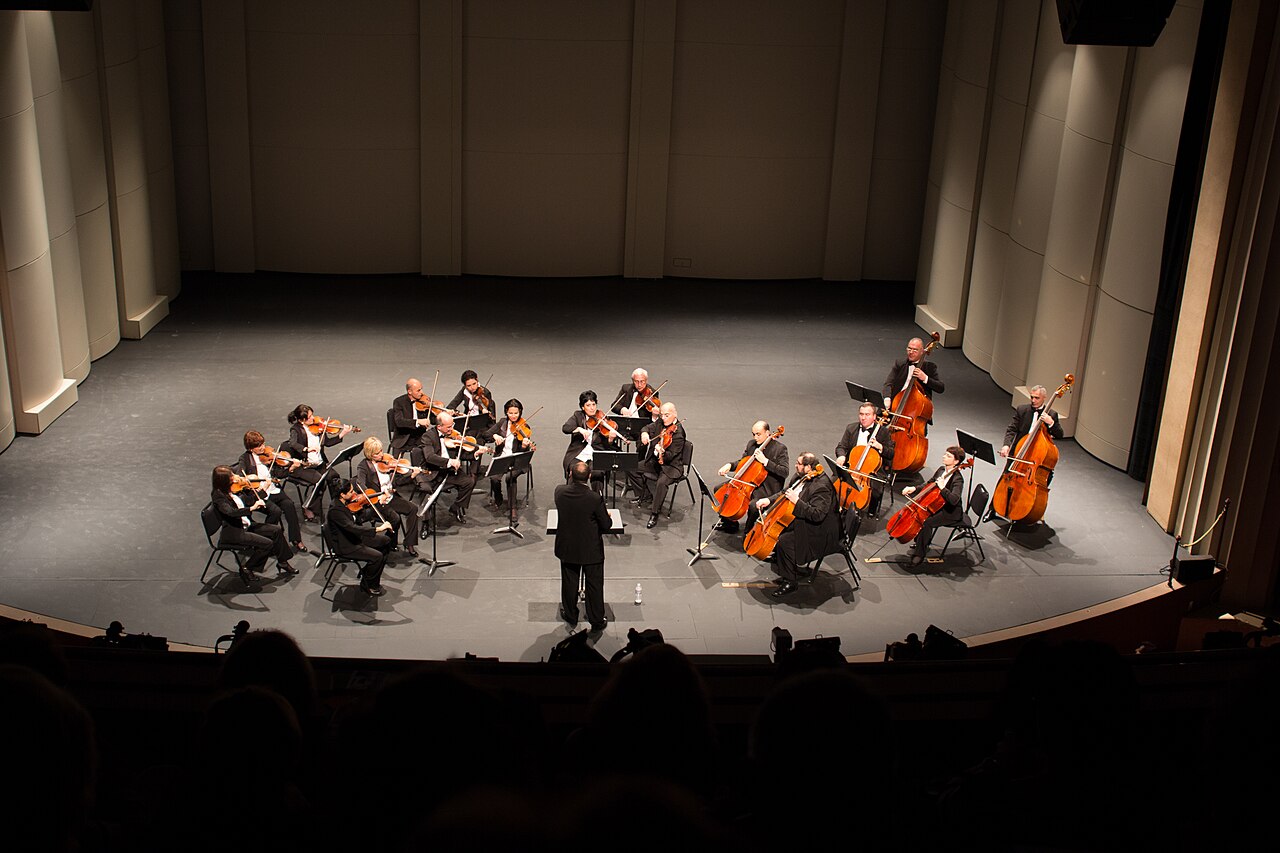
An orchestra is a big team of musicians. They play many kinds of instruments at the same time. A leader called a conductor stands in front and helps everyone play together. Orchestras often play classical music in large concert halls.
Parts of the Orchestra
An orchestra has four main sections of instruments. The string section has violins, violas, cellos, and basses. The woodwind section has flutes, clarinets, and oboes. The brass section has trumpets, trombones, and tubas. The percussion section has drums and other instruments you hit.
The Conductor
The conductor is the leader of the orchestra. They stand on a small platform so everyone can see them. They wave a thin stick called a baton to keep the beat. The conductor also tells the musicians when to play loud or soft. A good conductor helps the whole group sound like one big instrument.
More to Know
Strings (violin, viola, cello, double bass) are played with a bow or plucked. Woodwinds (flute, oboe, clarinet, bassoon) are blown across a hole or through a reed, and brass players (trumpet, trombone, French horn, tuba) buzz their lips into a metal mouthpiece. Percussion players hit, shake, or scrape instruments such as timpani and cymbals. The conductor makes no sound but keeps the players together. Famous composers include Bach, Mozart, who began composing at about age five, and Beethoven, who kept composing after he lost his hearing.
Fun Facts
- A full symphony orchestra can have more than 100 musicians.
- The violins usually sit closest to the conductor.
- Orchestras tune their instruments to the note A before each concert.
Did You Know?
The word 'orchestra' comes from an ancient Greek word that means the space in front of a stage where dancers performed.

You finished the article! Great job!