Wikimedia Commons
Kathak Dance
Kathak Dance
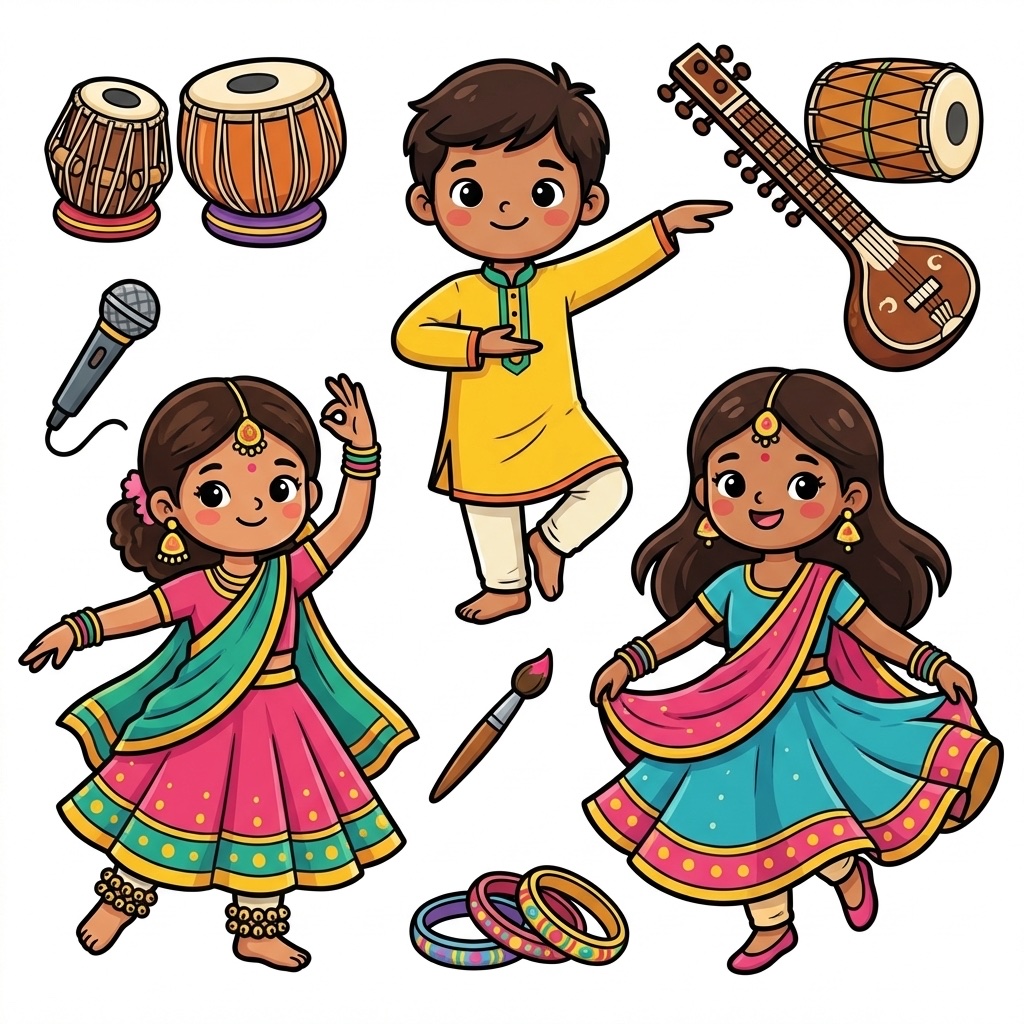
Kathak is one of the classical dance traditions of India. It developed in northern India and combines exact footwork, quick turns, graceful gestures, and expressive faces. Its name is linked to katha, a word meaning “story.” Long ago, storytellers used movement, music, and words to share tales. Today, dancers perform Kathak alone or in groups on stages around the world.
From Stories to Stages
Kathak grew and changed over many centuries. Storytellers performed tales from Indian traditions, including stories about Krishna. Later, the dance was also welcomed into royal courts, especially during the Mughal period. Court artists added new music, costumes, and performance ideas. These different influences helped shape Kathak into a polished stage art while keeping storytelling at its heart.
Several teaching traditions, called gharanas, developed in places such as Lucknow, Jaipur, and Banaras. Each one gives special attention to certain skills, but they all belong to Kathak.
Rhythm, Spins, and Expression
A Kathak dancer makes clear patterns by striking the floor with the feet. This footwork is called tatkar. Small ankle bells called ghungroo make the rhythms easier to hear. Dancers may also perform fast turns called chakkars, then stop in a balanced pose.
Rhythm is like a lively conversation. A dancer may recite rhythmic syllables, called bols, before showing the pattern with steps. Musicians answer on instruments such as the tabla. Hand gestures, eye movements, and facial expressions help the dancer become different characters and show feelings without speaking.
Learning and Performing
Kathak students practise balance, timing, strength, and careful listening. They often learn from a teacher over many years. During a performance, dancers and live musicians watch and listen to one another closely. Some sections tell a story, while others explore rhythm for the joy of movement and sound. Flowing costumes can make every turn especially easy to see.
Fun Facts
- Both women and men perform Kathak.
- A long string of ghungroo can hold many small bells.
- Kathak costumes reflect both regional and court traditions.
Did You Know?
A dancer can perform a complicated rhythm and finish exactly on the first beat of the musical cycle. That shared landing is an exciting moment for both the performers and the audience.
You finished the article! Great job!